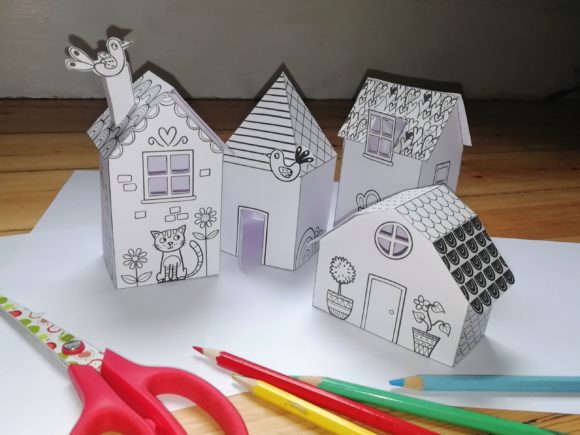
Paper Houses for Kids: A 3D SVG Craft Asset for Kids Crafts
As a professional graphic designer with years of experience in branding, print-on-demand, and social media visuals, I recently came across the design asset Paper Houses for Kids, created by ArtbyEmilySkinner. This 3D SVG file is marketed as a fun paper craft activity that inspires creativity in children. While it may seem like a simple illustration at first glance, its potential extends beyond just a downloadable DIY project—it’s a versatile graphic design asset that can be integrated into various creative projects for small businesses, handmade brands, and digital sellers.
First Impressions: Whimsical and Playful Visual Language
The initial impression of Paper Houses for Kids is one of charm and lightheartedness. The 3D effect adds depth to what could otherwise be a flat illustration, giving it a tactile and engaging quality. The visual style leans into a nostalgic, almost storybook aesthetic, which immediately suggests it would work well in environments that prioritize warmth, imagination, and a child-friendly tone.
For designers working on branding or product concepts for kids’ crafts, educational toys, or family-oriented content, this asset offers an instant mood boost. It feels like something you’d see in a boutique toy shop, a local kids' event flyer, or even a themed blog post about creative play. The whimsical nature of the design makes it ideal for clients who want their brand to feel approachable and playful without veering into unprofessional territory.
Real-World Application in Design Projects
I tested Paper Houses for Kids in several real-case design scenarios to assess its performance and adaptability:
- Product Mockups: When placed on a mockup of a printable kit box, the 3D SVG added a sense of craftsmanship and authenticity. The layered detail gave the packaging a premium look suitable for an Etsy product or a handmade business launch.
- Brand Identity: In a hypothetical brand concept for a children's DIY subscription service, I used the asset as part of a patterned background for labels and tags. It worked surprisingly well when balanced with clean typography, enhancing the theme without overwhelming the message.
- Social Media Graphics: For a campaign promoting seasonal activities, the design was effective as a hero image on Instagram posts and Pinterest pins. Its bold colors and clear focal point helped drive engagement, especially when paired with short, punchy copy.
- Cricut Projects: As a Cricut user myself, I found the SVG highly editable. Layers are well-structured, making it easy to customize individual elements like windows, doors, or roof textures. This flexibility is essential for crafters looking to personalize their designs.
- Printable Wall Art: The design scaled beautifully to larger sizes, maintaining crisp lines and vibrant colors. When printed on matte cardstock, the 3D layers gave it a tactile appeal that elevated the overall presentation.
- Editorial and Web Design: Used subtly in a blog post layout about summer activities, it functioned as a decorative accent rather than a focal point. The design supported the narrative without detracting from readability or hierarchy.
Design Compatibility and Style Considerations
This graphic design asset pairs best with soft pastel color palettes and rounded, friendly typefaces—think handwritten fonts or gentle sans serifs. I noticed that it clashed slightly with rigid serif or corporate-style fonts, so it's important to consider typographic harmony when incorporating it into a commercial design.
In terms of contrast, the design performs well on light backgrounds but needs careful handling when placed over dark or busy visuals. Testing showed that the intricate details became harder to discern on low-contrast surfaces, reducing the impact of the visual storytelling.
Where Paper Houses for Kids Shines
There are specific contexts where Paper Houses for Kids really excels:
- Themed Collections: Whether it's a holiday collection or a back-to-school line, this design helps reinforce a cohesive theme centered around creativity and hands-on learning.
- Hero Graphics: Its high-resolution format and 3D structure make it ideal for large-scale visuals such as posters, flyers, and banners.
- Supporting Brand Elements: The asset works great as a supporting element in marketing visuals, such as website headers, email newsletter accents, or social media stories.
- Commercial Design Assets: With proper licensing (always confirm before use), it can be repurposed for sublimation design on mugs, stickers, t-shirt design, tote bags, and other merchandise tied to kids' crafts or educational themes.
Use Carefully in These Situations
While the design has a lot of character, there are certain limitations to be aware of:
- Minimalist Branding: If the client's brand identity leans toward modern design and minimalism, this asset might feel too ornate or childish unless used very sparingly.
- Small Sizes: At smaller resolutions, the fine details in the 3D structure begin to blur, which can reduce the effectiveness of the design in areas like icons, thumbnails, or micro-interactions.
- Professional Corporate Materials: Though it can add a touch of personality to internal communications or training materials, it doesn't align well with formal presentations or reports.
- Complex Backgrounds: Placing it on textured or patterned backgrounds often results in visual noise. Always preview how it interacts with your chosen backdrop before finalizing a design.
Impact on Readability and Hierarchy
One of the most critical aspects of using any design asset is ensuring it supports—not hinders—readability and visual hierarchy. In my tests, Paper Houses for Kids didn’t interfere with legibility when used as a background or decorative layer. However, when positioned near key text elements, it needed sufficient spacing and contrast to avoid competing for attention.
Its emotional appeal is strong, especially for audiences targeting parents and educators. The design evokes nostalgia and creativity, making it useful for campaigns that aim to inspire active play or encourage STEM-based art education. That said, it does carry a certain level of informality that might not resonate with all demographics or brand voices.
Practical Designer Notes Before Use
Before integrating Paper Houses for Kids into a client project, here are some checks every designer should perform:
- Test in Black and White: Confirm if the design still holds its visual interest without color.
- Contrast Checks: Evaluate how it looks on both light and dark backgrounds, especially for digital ads or web design applications.
- Preview at Different Sizes: Ensure it maintains clarity and visual integrity when scaled down for buttons or up for wall art.
- Mockup Placement: Try placing it on product mockups to gauge how it contributes to the overall visual trust and perceived value of the item.
- Print Quality: Test printing to ensure the 3D layers translate well to physical formats, particularly for packaging design or merchandise.
- File Format Inspection: Review the included PNG transparency and SVG vector editability. Having transparent PNGs is crucial for overlay effects or Canva templates, while full SVG editability is essential for custom Cricut projects.
- Font Pairing: Compare how it looks alongside different font styles—serif, sans serif, script, display—to find the best typographic match for your project.
- Commercial License: Always verify that the asset includes a commercial license before using it in a design bundle or selling it as part of a digital product.
Why It Works for Creative Marketplaces and Print-on-Demand Sellers
For those operating in creative marketplaces or managing print-on-demand stores, Paper Houses for Kids is a solid choice. Its thematic consistency with kids’ crafts makes it a natural fit for products like sticker design kits, printable activity sheets, or themed party supplies. The 3D SVG format ensures scalability and versatility, allowing it to be adapted for multiple platforms and outputs.
What stands out most is how it enhances audience engagement. In a world where attention spans are short, adding a visually rich and interactive element like a paper house can help differentiate a product in a crowded space. It also serves as a conversation starter, which is valuable for bloggers and content creators aiming to build community around creative topics.
Final Thoughts for Design Professionals
Paper Houses for Kids isn’t just another clipart or illustration—it's a thoughtfully crafted design asset that brings a unique visual dimension to kids' craft-related projects. It bridges the gap between digital design and tangible creativity, making it a powerful tool for anyone involved in crafting, branding, or content creation for younger audiences.
When considering whether to include it in a design project, ask yourself: Does this asset support the visual mood and purpose of the piece? Will it elevate the emotional appeal without compromising professionalism? And most importantly, does it have the necessary file formats and licensing for commercial use?
If the answer is yes, then Paper Houses for Kids is definitely worth exploring. It’s a standout example of how thoughtful design assets can enhance the storytelling power of your work, especially in niche markets like handmade businesses or kids’ craft tutorials. Just remember to use it wisely and always test it thoroughly before sending it off for production or client approval.