Mini Agave Plant Template DIY Review for Real Embroidery Projects
If you're an embroidery designer or a creative entrepreneur diving into handmade products, you know that not every design translates well from screen to fabric. The Mini Agave Plant Template DIY caught my eye for its charming simplicity and the potential it holds for various projects. Let’s take a closer look at how this 3D SVG paper flower design works in real-life embroidery scenarios.
A Delightful First Impression
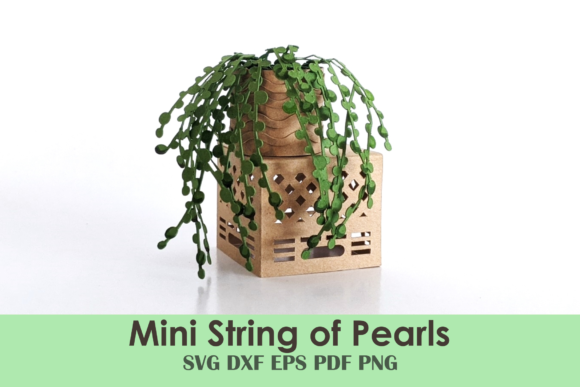
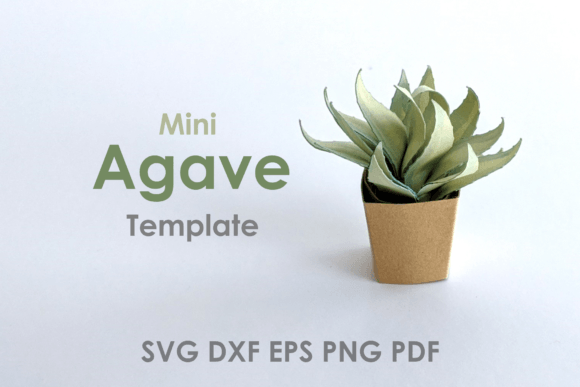
The Mini Agave Plant Template DIY brings a subtle yet modern aesthetic to your embroidery toolkit. Its compact size—approximately 1.75 x 1.5 inches for the plant and 1 x 1 inch for the planter—makes it ideal for smaller accents without overwhelming the space. The design has a stylized feel with clean lines and minimal detail, which gives it a versatile visual personality. It doesn’t scream for attention but adds just enough character to stand out on custom apparel or accessories.
I found the layout of the agave plant to be intuitive and balanced. The leaves are defined by smooth curves and gentle angles, while the planter offers a nice contrast in shape. Together, they create a cohesive scene that feels both natural and artistic. This makes it perfect for personalized gifts, nursery decor, or as part of a curated set of embroidery project assets for boutique branding.
Real-World Embroidery Applications
Let’s imagine using this design on a custom sweatshirt. I recently worked on a client project where we were creating personalized hoodies for a wellness retreat. The Mini Agave Plant Template DIY would fit beautifully on the sleeve near the wrist or even stacked along the hem for a botanical theme. Since it's a machine embroidery design, it can handle scaling up slightly if needed, maintaining clarity and definition without losing its delicate charm.
On tote bags, especially ones made of cotton canvas or linen, the design could serve as a small decorative accent. It doesn't require too much coverage, so it won’t compete with other elements. For baby clothes or holiday gifts, the plant is soft enough in style to avoid looking too mature, yet detailed enough to feel intentional.
As an embroidered patch, the Mini Agave Plant Template DIY shines. Its small footprint allows it to sit neatly on denim jackets, backpacks, or even caps. When stitched on a flat surface like felt or woven fabric, the 3D SVG aspect adds dimension without being overly complex. This is where the design really shows off its strengths: it looks handcrafted, even when machine-stitched.
Where to Use With Caution
Despite its appeal, there are a few limitations worth noting. If you're working with a very small hoop size, the planter might get lost in the details. I tested it on a 4x4 hoop and found that the smallest corners of the plant required careful stitching to maintain their shape.
Textured fabrics or materials with a rough weave may cause some stitch distortion, especially in the finer parts of the agave leaves. On stretchy knits, the design can pull out of alignment if not properly stabilized. Also, when embroidering on dark fabric, the default thread colors may not pop as intended. A black and white mockup test revealed that the contrast was low, which could make the design appear less vibrant than expected.
For layered garments, such as a cap or a curved surface, you’ll need to adjust the placement carefully. The planter sits flush, but the plant itself has slight elevation due to the 3D SVG construction. Without proper backing or stabilizer, the raised areas might sag or misalign during washing cycles, particularly if the item is used frequently, like a kitchen towel or apron.
Design Impact and Project Value
One of the biggest advantages of the Mini Agave Plant Template DIY is its ability to elevate a simple product into something more thoughtful. Whether it's a sweatshirt embroidery or a handmade product for an Etsy listing, adding this design instantly gives a sense of care and intention. Customers respond positively to subtle, nature-inspired motifs, especially when they’re presented cleanly and professionally.
It also contributes well to brand consistency. If your craft business focuses on minimalist, eco-friendly themes, this design fits right in. Its presence on a printable mockup or digital preview adds visual appeal without overcomplicating the overall look. As a result, buyer engagement increases because the product feels unique and high-quality.
However, keep in mind that the design’s simplicity means it won’t anchor a busy layout. It works best when placed as a supporting element or in monochrome schemes. That said, it still manages to bring a touch of life and texture to any piece, enhancing the perceived value of the finished product.
Designer Tips for Successful Stitching
- Test on scrap fabric first: Especially if you're planning to scale the design or use it on a textured material. You'll want to ensure the stitches lay smoothly and the design maintains its shape.
- Check thread color contrast: If you're using it on dark fabric, consider switching to lighter thread shades to maintain visibility and impact.
- Review stitch density: Because it's a 3D SVG, the layers might have different stitch requirements. Adjust densities accordingly to prevent puckering or unevenness.
- Confirm hoop size: While the design can be scaled, it's optimized for a certain range. Always check compatibility with your machine and hoop dimensions before final production runs.
- Inspect small details: The corners and leaf tips are delicate. Make sure your machine handles those areas accurately to preserve the design’s integrity.
- Use proper stabilizer: Especially important for stretchy or thin materials. A tear-away or cut-away stabilizer can help maintain shape and durability after multiple washes.
- Test in black and white: To see how it performs in grayscale. This helps determine if the design will work across a variety of color palettes and backgrounds.
- Compare light and dark fabric backgrounds: This ensures the design remains visible and attractive regardless of the fabric you choose.
- Check whether it works for commercial use: Before selling embroidered patches or including it in digital embroidery files for resale, always confirm licensing terms.
Final Thoughts for the Practical Designer
After several trials with the Mini Agave Plant Template DIY, I've come away impressed with its adaptability and aesthetic versatility. It's not a showstopper, but it's a solid choice for designers who appreciate understated elegance. The design lends itself well to custom apparel, holiday embroidery, and nursery decor, making it a great addition to your design assets library.
Its performance depends heavily on context. For instance, on a tote bag made of medium-weight cotton, it stitched flawlessly and added a refined touch. But on a stretchy baby bodysuit, it required more attention to stabilizer and tension settings. Still, the results were satisfying and customer-ready.
Overall, this is a practical and visually appealing embroidery file that can boost the presentation of your handmade products. Just remember to consider the fabric type, hoop size, and thread choices to get the most out of it. And always, always test it before committing to a large batch of commercial embroidery or a major project launch.